
Full Mouth Rehabilitation
Restoring Function, Stability, and Long-Term Oral Health
A structured approach to rebuilding damaged or missing teeth - focused on restoring function, comfort, and long-term stability through comprehensive, phased treatment planning.
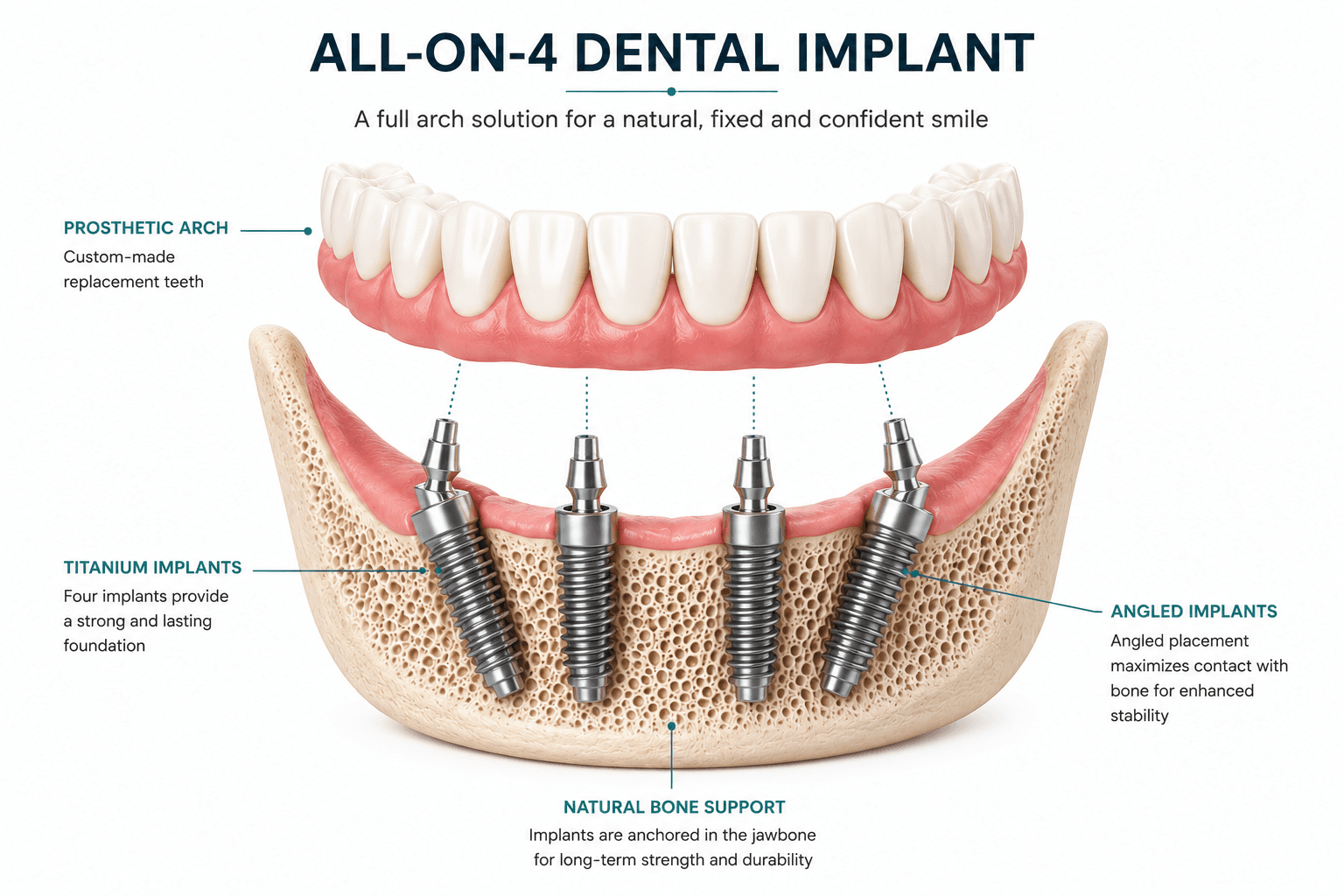
Illustration of implant-supported full arch rehabilitation (conceptual representation).
What is Full Mouth Rehabilitation?
Full mouth rehabilitation is a comprehensive treatment approach used to restore the function, structure, and health of the entire mouth. It is typically recommended when multiple teeth are missing, damaged, worn, or affected by long-standing dental issues. Treatment is planned in phases, combining restorative and, where required, surgical procedures to achieve stable and predictable outcomes.
Who May Need This?
- Multiple missing teeth
- Severely worn, broken, or failing teeth
- Long-standing untreated dental problems
- Difficulty in chewing or bite imbalance
- Previously treated cases requiring correction
TMD Considerations
Some patients may also experience jaw-related symptoms such as discomfort, clicking, or difficulty in opening and closing the mouth. These can be associated with temporomandibular disorders (TMD) and underlying bite imbalance.
A detailed evaluation of jaw function, occlusion (bite), and muscle activity is carried out as part of treatment planning.
Where appropriate, rehabilitation may be planned to improve bite stability, which can help in reducing functional strain on the jaw joints and supporting structures. Treatment decisions are individualised, and not all TMD conditions require full mouth rehabilitation.
Treatment Approach: A Structured, Step-by-Step Process
- Detailed clinical and radiographic evaluation
- Diagnosis of bite, bone support, and tooth condition
- Phased treatment planning based on complexity
- Integration of implants, crowns, bridges, or other restorations
- Focus on long-term function and stability
Treatment Options
Depending on the case, treatment may include:
- Dental Implants for replacement of missing teeth
- Implant-Supported Full Arch Restorations
- Crowns and Bridges for restoring damaged teeth
- Bone Grafting (if required)
- Bite Correction and Occlusal Adjustment
When Conventional Treatment Isn't Enough?
Many patients undergoing full mouth rehabilitation present with complex conditions such as:
- Bone loss affecting implant placement
- Failed or incomplete previous treatments
- Long-term damage or neglect
- Limited options with conventional approaches
A structured treatment plan allows such cases to be managed more predictably.
Treatment Process
Evaluation, diagnosis and treatment planning.
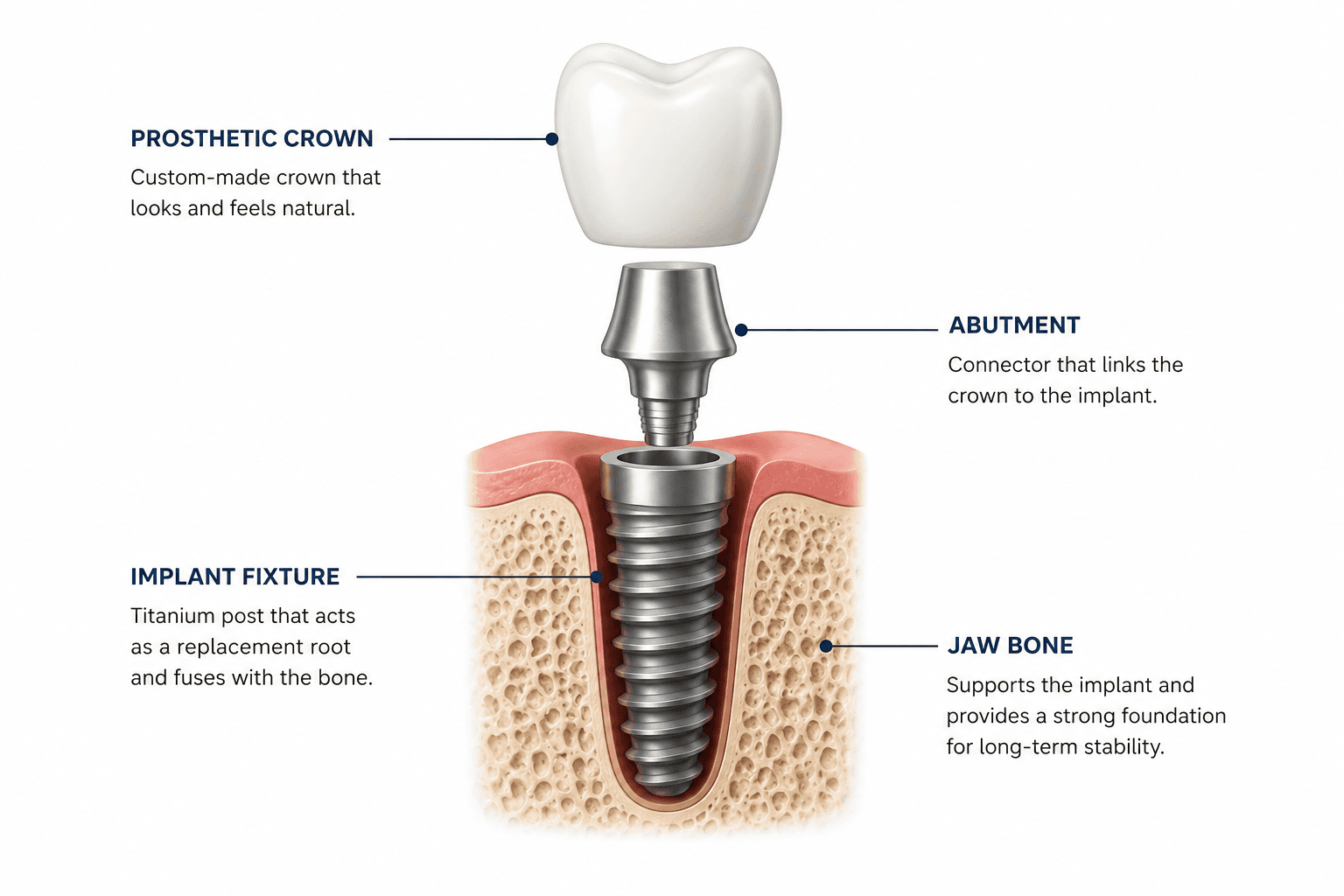
Implant placement (if required): original tooth is removed or missing; titanium post inserted into the jawbone.
Implant is allowed to heal and fuse with the bone (osseointegration).
Healing phase, final restoration.
Abutment is attached to connect the new tooth; a custom-made crown is placed on top.
Outcome: Restored look and function of the tooth.
Focus on Long-Term Results
Aesthetic and functional improvements are planned not just for immediate results, but for long-term stability and maintainability.
- Comprehensive diagnosis before treatment
- Phased execution for better control
- Emphasis on durable, stable outcomes
- Integration of function and aesthetics
For Patients Visiting from Outside India
Patients from different regions choose the clinic for structured planning, clear communication, and efficient treatment scheduling.
Frequently Asked Questions
Treatment duration varies based on complexity and is completed in phases over multiple visits to ensure stability and accuracy.
Treatment is carried out under controlled clinical conditions with appropriate anaesthesia, ensuring patient comfort throughout.
The goal is to restore functional chewing ability and bite stability, allowing patients to return to normal eating habits.
Not in all cases. Treatment depends on the condition of teeth and bone. A combination of approaches may be used.
In selected cases, improving bite stability may help reduce functional strain on the jaw. A detailed evaluation is required to determine the appropriate approach.
Yes. Evaluations can be initiated remotely, and treatment is structured in phases to accommodate travel timelines.
Related Treatments
Start with a Clear Understanding of Your Treatment Options
Full mouth rehabilitation requires careful planning. A detailed evaluation helps determine the most suitable and structured approach for your case.